
For years, Costco has been the shorthand for bulk buying done right: cavernous aisles, pallet-stacked inventory, and the thrill of finding something unexpectedly good at a surprisingly good price. But in Southern California, a newer contender is borrowing the warehouse-club playbook—and rewriting a few rules of its own.
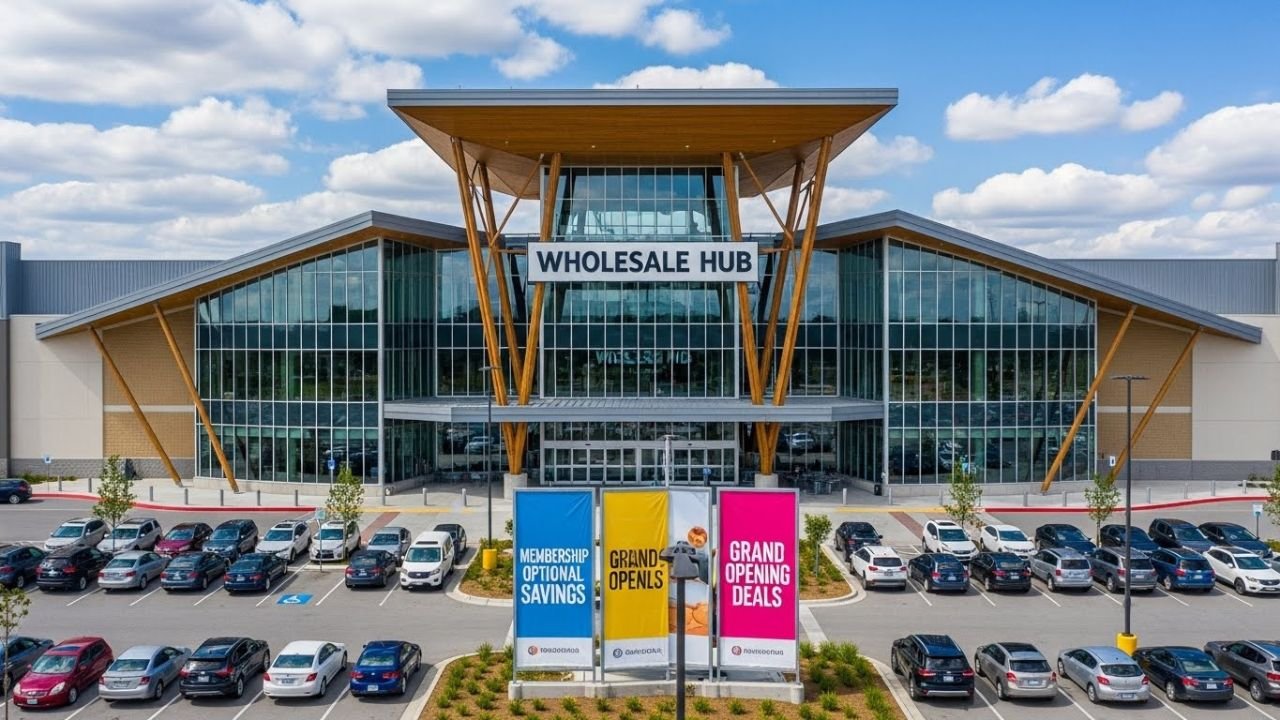
Resco Food Service, a grocery megastore in the City of Industry (east of downtown Los Angeles), has been drawing attention as a Costco-like shopping destination with a heavy emphasis on Asian groceries, specialty snacks, and restaurant-scale staples. It’s big, it’s buzzy, and its headline hook is simple: an optional $20 annual membership that unlocks deals, rather than a mandatory fee just to walk through the door.
That “membership, but make it optional” twist matters—especially at a time when value-conscious shoppers are scrutinizing subscriptions of every kind. And it signals something broader: warehouse-style retail isn’t just about giant jars of peanut butter anymore. It’s becoming a format that niche assortments and culturally specific products can thrive in, not merely survive.
A Warehouse Club Feel—Inside a Repurposed Office Building
Resco’s setting is part of its story. Instead of a purpose-built big-box shell, the megastore operates out of what looks like a former office building. The result is a hybrid vibe: industrial-scale shelving and shrink-wrapped pallets, but with the surprise of finding it in an environment that wasn’t originally designed for grocery retail. SFGATE
According to SFGATE, Resco opened in January 2024 and stocks more than 5,000 items—an assortment that blends bulk essentials with “treasure hunt” discoveries, from hard-to-find snacks to specialty pantry goods. That combination is familiar to Costco members, but the product mix pushes the concept in a different direction.
The Hook: A $20 Membership That Isn’t Required
Costco’s model is famously membership-first: you generally need to pay to shop. Resco flips that. Shoppers can browse and buy without joining, but frequent visitors can opt into a $20 annual membership to access discounts and special deals.
That pricing stands out against mainstream warehouse clubs. While membership tiers and fees vary, the psychological difference is clear: “Try us without committing” is a lower-friction invitation than “Pay before you enter.” In practice, that can widen the funnel—especially for curious first-timers who want to explore a new concept store without feeling locked into yet another yearly charge.
What’s on the Pallets: Asian Groceries, Viral Snacks, and Restaurant-Scale Staples
Resco’s assortment is where it tries to carve out a distinct identity. SFGATE describes aisles packed with Asian ingredients, snacks, sauces, noodles, teas, and frozen foods—along with housewares and some unexpected finds that reward browsing.
The store reportedly leans into both everyday shoppers and restaurateurs. That means you might see 50-pound bags of rice alongside bulk-size condiments intended for commercial kitchens, a hallmark of “cash-and-carry” foodservice suppliers—except packaged in a way that’s approachable for home cooks who simply like stocking up.
That overlap is strategic. Costco has long served small businesses alongside families; Resco is targeting a similar mix, but with a sharper focus on specialty and international foods that many shoppers don’t reliably find at conventional big-box grocers.
Social Media Buzz Turns a Grocery Run Into a Destination
Warehouse stores have always relied on word-of-mouth—“You have to see what I found.” Resco appears to be getting that effect at internet speed.
SFGATE notes the store has built a sizable Instagram following and has become a frequent backdrop for food influencer content, driven by the visual spectacle of giant shelves and the novelty of unexpected items. In other words: it’s not just a place to shop; it’s a place people want to show.
That matters because the modern “discovery economy” is increasingly curated by short videos. A single clip of rare chip flavors, unusual frozen treats, or a wall of noodles can function like an ad campaign—except it’s delivered by creators and shared peer-to-peer, with built-in trust and novelty.
Why This Challenges Costco (and Why It Might Not)
Calling Resco a “Costco rival” is accurate in format, but the competition is nuanced.
Where Resco could pull shoppers away:
-
Specialty selection: If you primarily shop for Asian ingredients, snacks, and pantry staples, Resco’s focus may feel more relevant than Costco’s broader, more generalized mix.
-
Lower membership barrier: Optional membership means casual shoppers can test the store without upfront commitment.
-
Less crowding: Part of Costco’s “problem” is its popularity. Resco’s newer footprint may offer a less hectic experience, at least for now.
Where Costco remains hard to beat:
-
Scale and pricing power: Costco’s global volume helps it negotiate prices and maintain a tightly optimized assortment.
-
One-stop breadth: Costco’s appeal often comes from being able to buy groceries, electronics, furniture, and services in one trip.
-
Habit and loyalty: Warehouse club members are sticky; once a household builds routines around Costco’s pack sizes and house brands, switching is inconvenient.
Even TheStreet points out that Resco’s product selection—reported to be heavily focused on Asian goods—may not appeal to everyone, limiting how much business it can siphon from a mainstream club.
The Bigger Trend: Warehouse Retail Gets More Specialized
Resco’s rise taps into a broader retail evolution: shoppers are no longer choosing between “big-box” and “specialty.” They want both—value and specificity.
In many metro areas, international supermarkets and regional specialty chains have become essential stops, not occasional detours. What Resco is doing is packaging that demand inside a warehouse format that signals savings, abundance, and discovery. Chowhound, for instance, frames Resco as a warehouse-style store sometimes nicknamed the “Asian Costco,” highlighting how the bulk format is being adapted to culturally specific assortments.
If that model works, it could inspire copycats: other foodservice suppliers opening their doors wider to everyday shoppers, or more “category-leading” grocers embracing pallet-style bulk presentation to communicate value.
What Customers Actually Get: Hours, Location, and the Shopping Experience
Practical details help explain why a store becomes a phenomenon.
SFGATE lists Resco Food Service at 17171 Gale Ave. in the City of Industry, open daily from 8 a.m. to 8 p.m.—hours that support both restaurant buyers (who shop early) and households (who shop after work). The company’s own site positions it as a cash-and-carry foodservice supplier focused on top-quality products and everyday low prices, reinforcing the idea that it’s designed for repeated stock-up trips rather than occasional novelty visits.
And unlike traditional supermarkets built around quick trips and narrow aisles, the warehouse layout turns shopping into roaming. That’s part of the appeal: the store encourages exploration, which increases the odds that customers leave with both essentials and impulse discoveries.
The Bottom Line: A Small Membership Fee, a Big Format Bet
Resco Food Service isn’t trying to out-Costco Costco by replicating the entire playbook. It’s taking the warehouse-club feeling—bulk value, big shelves, surprise finds—and tuning it for a specific kind of shopper: people who want restaurant-scale options and globally familiar flavors, without a high barrier to entry.
The optional $20 membership is the headline, but the deeper strategy is assortment and identity. If Resco keeps converting first-time curiosity into repeat trips, it won’t just be a novelty “megastore.” It will be proof that the warehouse format has room to evolve—especially when it’s built around what mainstream retail often under-serves: depth, specificity, and cultural variety.