

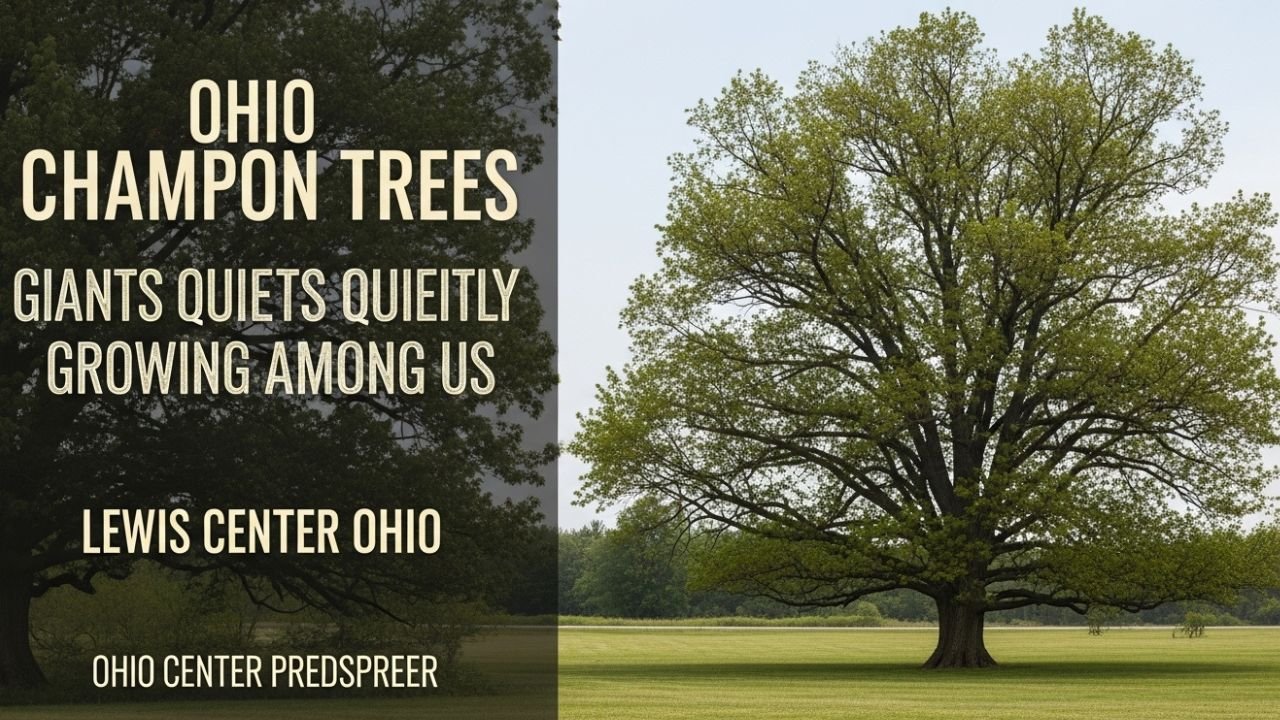
Ohio Champion trees Lewis center ohio is known for many things — rapid suburban growth, good schools, and convenient access to Columbus. But it also hides another identity: a place where champion trees — the largest known specimens of their species in the state — quietly tower over neighborhoods, parks, and private yards. These remarkable trees are not just scenic accents; they are living landmarks, ecological powerhouses, and pieces of natural history that predate most of the town’s development.
What Are “Champion Trees”?
When people hear “champion tree,” they may imagine the oldest oak in some wilderness. In reality, a champion tree is defined scientifically: it’s the largest known individual of a species within a defined geographic area — in this case, the state of Ohio. A standardized system measures:
-
Trunk circumference (measured at 4.5 feet above ground)
-
Total height
-
Crown spread (the width of the canopy)
These three figures are added to calculate a score. The larger the score, the higher the likelihood of champion status. The process is overseen by forestry authorities, but it often starts with curious residents spotting an unusually big tree.
Champion status isn’t about being old alone — it’s about being big relative to others of the same species. A tree might be centuries old but not champion if others of its kind have grown larger under better conditions.
Lewis Center’s Hidden Giants
Contrary to what you might expect, Lewis Center — a landscape increasingly filled with housing developments and commercial centers — still hosts significant trees that qualify as champion specimens or come close. Much of this owes to ancient landscapes and soil, which were shaped by glacial activity, leaving fertile ground ideal for deep rooting and extended growth.
In areas where development preserved old-growth or long-standing trees, these specimens continued growing into remarkable forms. In some cases, builders designed around these massive trees rather than removing them, incorporating mature oaks and maples into neighborhood layouts.
One particularly notable example in Lewis Center is a legendary white oak — a tree often talked about among local nature enthusiasts. This oak has been measured at approximately:
-
233 inches in circumference
-
65–71 feet tall
-
124-foot average crown spread
These measurements place it among the largest known trees in the area, even if it doesn’t always appear on official state champion lists.
Species Commonly Recognized Around Lewis Center
Several species, native to central Ohio and commonly found in and around Lewis Center, excel into champion forms:
1. Eastern Cottonwood
Often found near creeks and drainage corridors, cottonwoods grow tall and wide in moist soils. Delaware County — where Lewis Center sits — hosts some of Ohio’s largest cottonwoods.
2. White Oak & Bur Oak
Oaks are long-lived giants. White oaks, in particular, thrive where space is abundant, making some Lewis Center oaks contenders for recognition.
3. Silver Maple
These trees grow rapidly and develop wide crowns in central Ohio’s rich soil, making them frequent entries in champion listings.
4. American Sycamore & Tulip Tree
Found in parklands and older woodland pockets, these trees boast impressive height and volume given the right conditions.
Not all of these specimens are officially listed as state champions, but many are champion-caliber — meaning they are among the largest local examples of their species.
Where to Find Champion Trees in Lewis Center
Lewis Center doesn’t have a formal trail of champion trees like a national park might, but there are several types of places where these giants are more likely to be found:
Public Parks and Preserves
Areas like Highbanks Metro Park feature mature forest and open space where large trees have been preserved. Established in the 1970s along the Olentangy River, Highbanks provides habitat conducive to big tree growth.
Older Neighborhoods
Some residential areas contain trees that predate housing development. These can be on private property but visible from public streets.
School and Institutional Grounds
These sites often change slowly over time, allowing trees to grow undisturbed for many decades.
Private Yards and Historic Land Parcels
Many champion trees are found on land that was once farmland or woodland before development. In these cases, the protection and stewardship provided by homeowners have allowed these trees to thrive.
Some of these trees are accessible to the public, while others on private land are best admired respectfully from a distance.
The Human Role: Discovery and Stewardship
What makes champion tree culture especially rewarding is its community-driven nature. Many champion trees in Lewis Center were first documented not by professional foresters but by residents who noticed unusually large trees and decided to measure and nominate them.
Ohio’s forestry program encourages such citizen participation, fostering awareness of trees as part of local heritage. A homeowner might discover their tree is a champion only after someone asks permission to measure it — sparking a sense of pride and responsibility.
Preservation efforts vary. Some homeowners and municipalities take active measures to protect these trees — adjusting landscaping plans, consulting arborists, or installing protective barriers during construction. Others benefit from simply being left undisturbed through gradual development.
Why Champion Trees Matter
Champion trees are much more than curiosities. They provide significant ecological benefits, including:
-
Carbon storage far greater than smaller trees
-
Stormwater absorption and erosion control
-
Shade cooling neighborhoods during summer heat
-
Habitat for birds, insects, and other wildlife
Large trees help stabilize suburban environments and connect residents to a deeper sense of place. They stand as biological records of environmental change, weathering storms and seasons year after year.
Looking Ahead: The Future of Champion Trees in Lewis Center
As Lewis Center continues to grow and change, champion trees remain a reminder that nature’s timeline often exceeds human planning horizons. Community awareness and involvement will be key to ensuring these natural giants are protected for future generations.
With ongoing development pressures, balancing growth with conservation will remain a challenge — but the presence of champion trees suggests it’s possible to build around heritage rather than erase it.
The next time you drive through a neighborhood or walk a local park in Lewis Center, look skyward. You might just be standing next to one of Ohio’s silent champions — a living testament to time, resilience, and quiet grandeur.

